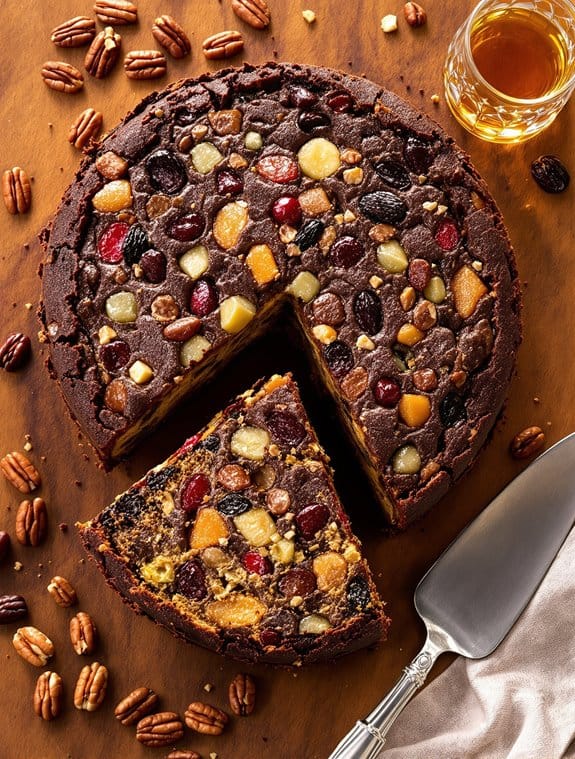
Ingredients
Equipment
Method
- Preheat your oven to 225°F.
- Chop the candied cherries, candied pineapple, citrus peel, candied orange peel, dried figs, pitted dates, raisins, currants, pecans, and black walnuts into your preferred sizes. Place all the chopped fruits and nuts in a large pan and lightly dust them with a portion of the 4 cups of all-purpose flour to help prevent clumping.
- In a separate mixing bowl, beat the 12 eggs and set them aside.
- Using an electric mixer, cream the softened butter or margarine until smooth.
- Add to the creamed butter the beaten eggs, 2 cups sugar, 1 cup dark molasses (with 1/2 teaspoon baking soda dissolved in it), 1 tablespoon ground cinnamon, 1 teaspoon ground allspice, 1/2 tablespoon ground cloves, 1 tablespoon nutmeg, and 1 tablespoon vanilla extract (or brandy/whiskey). Then incorporate the remaining all-purpose flour and 2/3 cup brandy. Mix until a fragrant, cohesive batter is formed.
- Make a well in the center of the fruit and nut mixture and pour in the batter. Gently mix and knead the ingredients just until evenly combined.
- Pack the combined mixture into eight foil-lined loaf pans that have been well greased with vegetable oil or butter. Place a shallow pan of water in the oven beneath the loaf pans to help maintain moisture during baking.
- Bake the fruitcakes for 3 to 4 hours. Begin checking around 1 1/2 hours to monitor for edges crisping too quickly; if the tops begin to crack prematurely, lower the oven temperature slightly and refresh the water pan as needed.
- Once numerous small cracks appear across the tops of the cakes, remove them from the oven and allow them to cool. While still slightly warm, dab the cakes liberally with additional brandy.
- Wrap each cake in wax paper, then in aluminum foil and newspaper. Place them in a cool area to age for at least one month so that the rich flavors develop and mature.
Notes
This heritage fruitcake recipe is a labor of love that requires both precision and patience. The slow baking process at a low temperature helps develop a dense, moist texture while the month-long aging period deepens the flavors and aroma. Carefully monitor the baking process to adjust the heat or water as needed, and feel free to experiment with substitutions like dried apricots, honey instead of molasses, or even a handful of chocolate chips for a modern twist.