Ingredients
Equipment
Method
- In a mixing bowl, stir together 2 tablespoons soy sauce, 1 tablespoon sesame oil (from the total 3 tablespoons), 2 teaspoons sugar, 1 minced garlic clove, 1/2 teaspoon grated ginger, and 1/2 cup apple juice to create the marinade. Add 1/2 pound lean ground beef to the bowl and mix well. Set aside to marinate while you prepare the other components.
- Cook 1 cup short-grain rice according to the package directions until it is sticky and tender.
- Heat 1/2 tablespoon of sesame oil in a large skillet over medium heat. Sauté the thinly sliced 1/2 zucchini for about 5 minutes until tender; then transfer the zucchini to a plate.
- Using the same skillet (adding a little extra sesame oil if needed), sauté 1 cup of thinly sliced mushrooms until soft. Remove and set aside.
- Blanch 1/2 cup of bean sprouts in boiling water for approximately one minute, then drain.
- In the skillet, cook the marinated beef over medium heat until it is fully browned.
- In a separate pan, heat the remaining sesame oil and fry 2 eggs until the whites are set but the yolks remain runny.
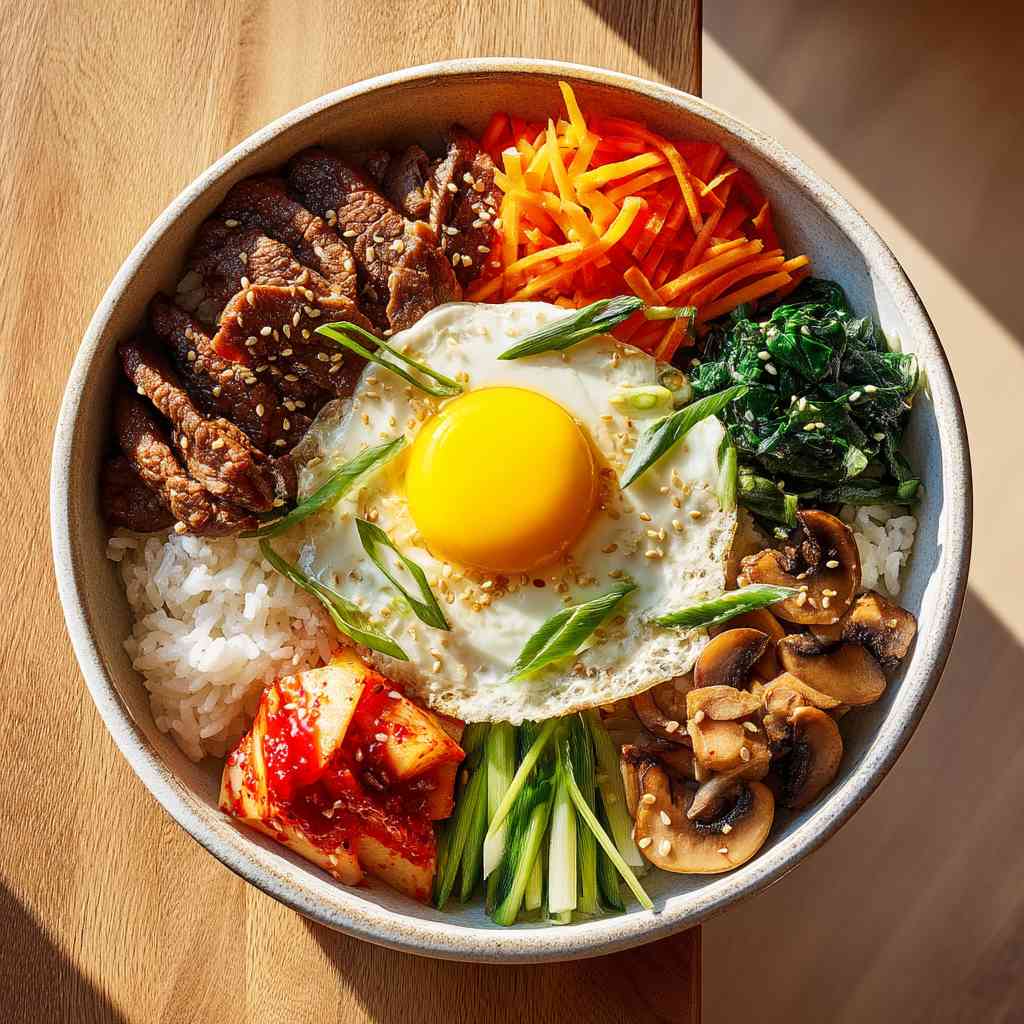
- To assemble the bibimbap, spoon a portion of hot rice into each bowl. Artfully arrange piles of the cooked beef, sautéed zucchini, mushrooms, blanched bean sprouts, and 1/2 cup julienned carrots around the bowl.
- Top each bowl with a fried egg and serve with a side of spicy sauce prepared by mixing 1/4 cup Korean chili paste (gochujang) with 2 tablespoons rice wine vinegar.
- When ready to eat, mix all the ingredients together so that the runny egg and spicy sauce coat every bite.
Notes
This colorful bibimbap bowl is highly adaptable and perfect for customizing with your favorite vegetables or protein. You can substitute beef with tofu or ground turkey and experiment with different veggies based on what you have on hand. Preparing components ahead of time speeds up assembly, and serving with traditional Korean side dishes like kimchi adds an authentic touch. Enjoy the visual appeal and balanced flavors with every mixed bite.