Why You’ll Love this Golden Fish and Chips
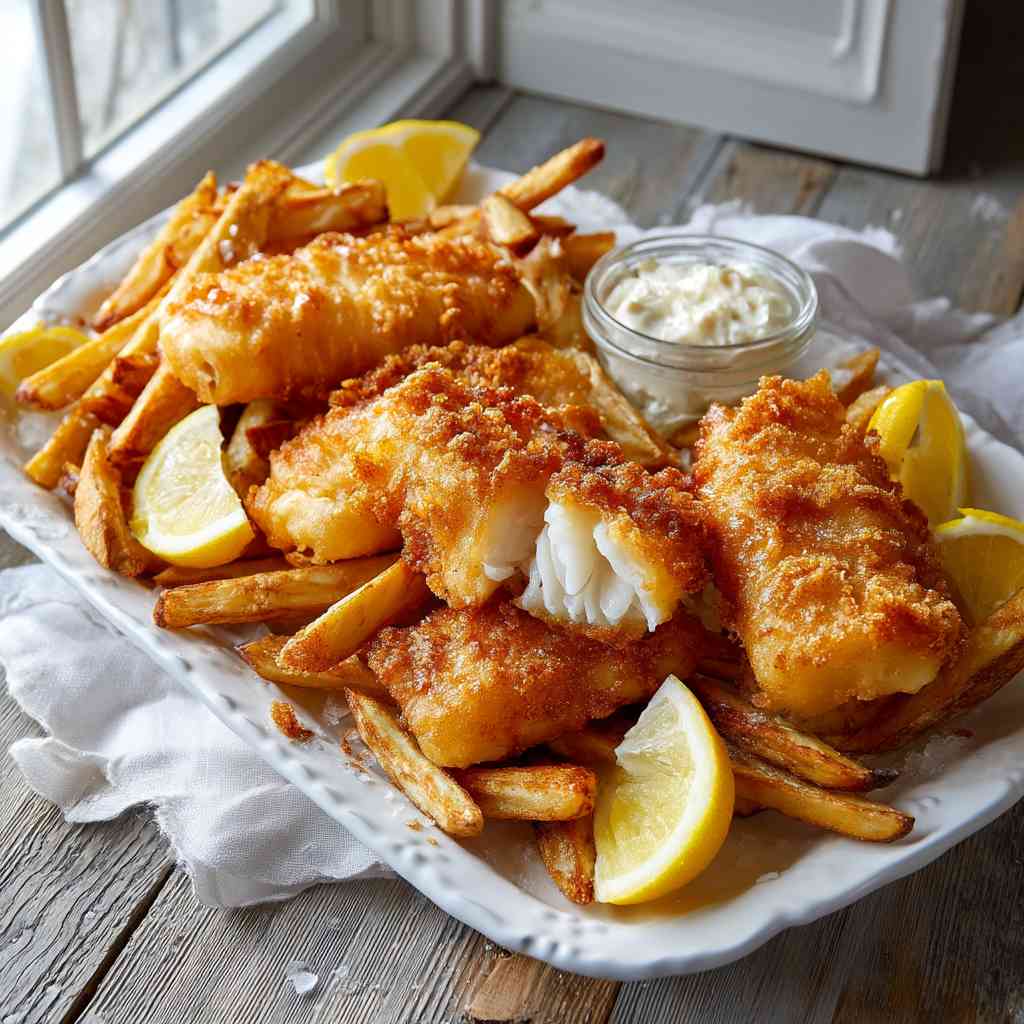
When you bite into these perfectly golden fish and chips, you’ll understand why this classic dish has stood the test of time.
The crispy, airy batter practically shatters under your fork, revealing tender white fish that’s perfectly cooked inside. The self-raising flour is what creates that signature light texture.
Getting the oil temperature just right matters more than anything else here. Too cool and you’ll get soggy batter, too hot and it’ll burn before cooking through. That “faint haze” visual cue is the most reliable way to gauge readiness.
And don’t skip the lemon wedges—that bright acidity cuts through the richness of the fried batter and balances every bite.
What Ingredients are in Golden Fish and Chips?
You’ll need just a handful of simple ingredients for this one. The quality of the result comes down to technique and timing more than anything else.
The self-raising flour is particularly important here—it’s what gives the batter that light, airy texture that separates a good fish and chips from a heavy, doughy one.
- Deep frying oil (enough to half-fill a deep pan)
- 8 medium white fish fillets
- 4 ounces self-raising flour
- 1/4 teaspoon salt
- 1 egg
- 1 tablespoon melted butter
- 5 fluid ounces milk
- Lemon wedges (for garnishing)
When selecting your fish, any firm white fish works well—cod, haddock, or pollock are traditional choices.
The oil deserves some consideration too. While the recipe simply calls for “deep fat” or “oil,” a neutral oil with a high smoke point, like vegetable or canola oil, is the best choice for clean flavor and consistent frying.
Those lemon wedges aren’t just decorative. A bright, acidic squeeze cuts through the richness of the fried coating and sharpens the flavor of the fish underneath. Consider them essential.
How to Make this Golden Fish and Chips
The first step is preparing your cooking oil. Half-fill a deep pan with your frying oil, then heat it until you see a faint haze rising from the surface. To test if it’s hot enough, drop in a small cube of bread—it should sink to the bottom, rise right back up, and turn golden in about 50 seconds.
Getting this temperature right is essential, as too cool oil will make your batter soggy, and too hot will burn the outside before cooking the fish through.
While your oil heats, prepare the batter by sifting 4 ounces of self-raising flour and 1/4 teaspoon salt into a mixing bowl. Then beat in one egg, 1 tablespoon of melted butter, and 5 fluid ounces of milk until you have a smooth, flowing batter.
The consistency should be similar to heavy cream—thick enough to coat the back of a spoon but still pourable. Next, dip two fish fillets into the batter, making sure they’re completely coated. Using kitchen tongs or a fork, carefully lower the coated fish into the hot oil.
Let them fry until crisp and golden brown, which takes about 6-8 minutes for larger pieces and 4-5 minutes for medium-sized fillets.
Once golden, lift the fish from the oil and drain them on plain white paper—the traditional way to absorb excess oil. Avoid printed newspaper, which can transfer ink to your food.
Continue battering and frying the remaining fillets in batches of two until all are cooked. For serving, arrange the fish on plates with a lemon wedge for that essential citrus finish.
The contrast between the shattering exterior and the steamy, flaky fish inside is what makes this dish worth the effort. And while chips aren’t included in the recipe directions, thick-cut fries alongside are practically non-negotiable for the complete experience.
Golden Fish and Chips Substitutions and Variations
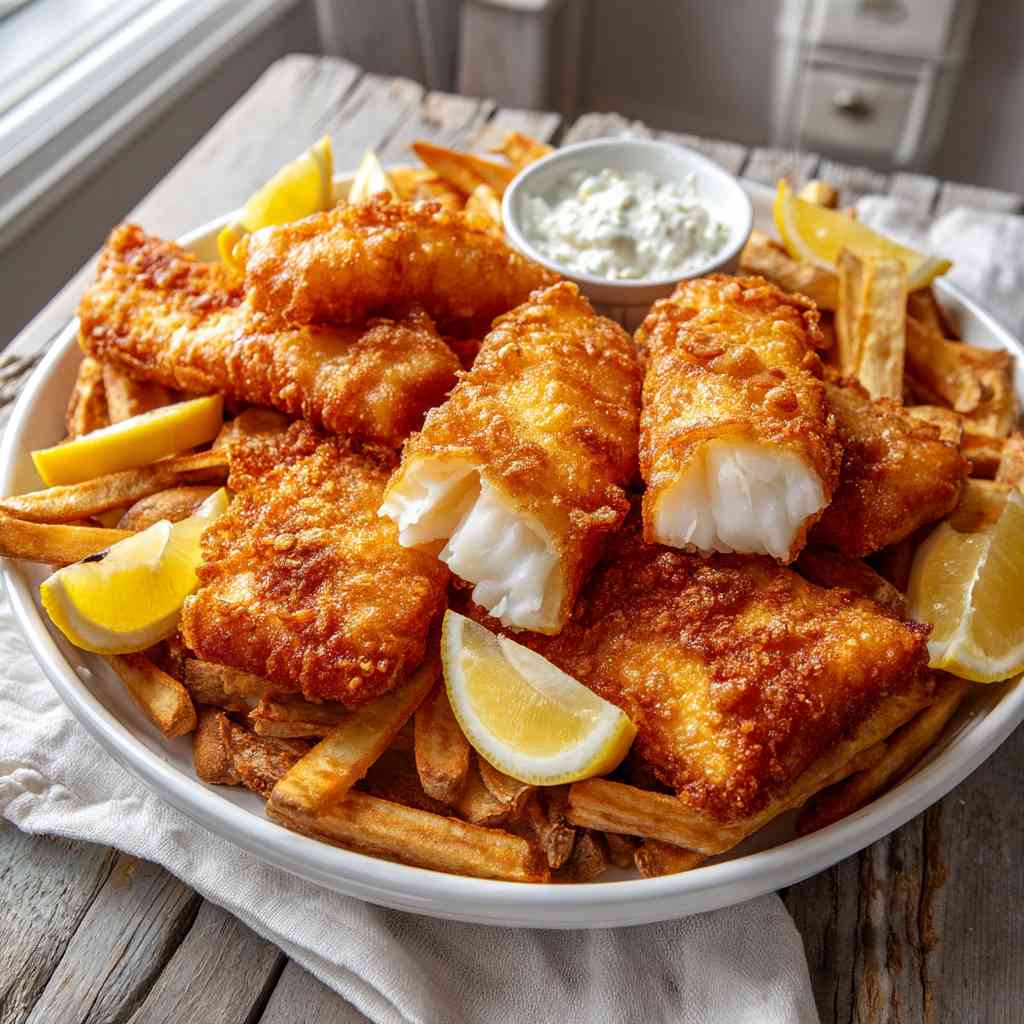
This recipe offers plenty of room to adjust flavors and ingredients while keeping that golden crunch.
Cod, haddock, and pollock all work well depending on what looks freshest at the market.
For a lighter batter, try using sparkling water instead of milk—the carbonation creates a noticeably more delicate, airy coating.
An air fryer works as an alternative to deep frying, though the texture will be drier and less like a traditional chip shop result.
You can also add herbs, a dash of curry powder, or a splash of beer to the batter for a different flavor profile.
Adding grated lemon zest to the batter brings a subtle citrus brightness that pairs especially well with the fish.
What to Serve with Golden Fish and Chips
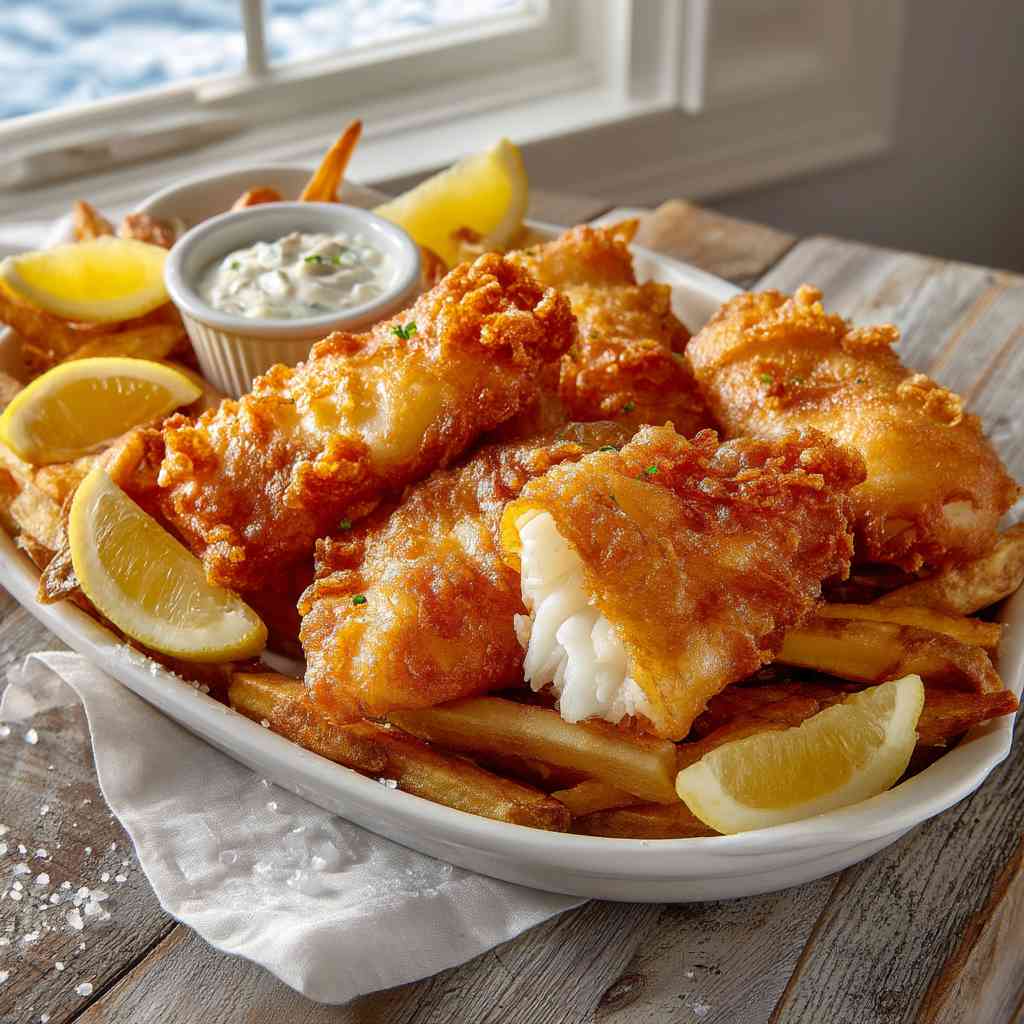
The right accompaniments round out this dish nicely.
Tangy malt vinegar sprinkled liberally over the chips gives that authentic British fish shop flavor.
For a colorful side, try mushy peas—that vibrant green staple found in nearly every British pub.
Tartar sauce is a natural match for dipping, and coleslaw adds a cool, crunchy contrast. The recipe mentions Fish and Chip Shop Curry Sauce, which is well worth the extra effort if you want something richer on the side.
A cold pint of lager or ginger beer pairs well if you’re looking to complete the meal.
Final Thoughts
Once you’ve got the hang of this recipe, making fish and chips at home becomes a straightforward weeknight option.
The two things that matter most are batter consistency and oil temperature. Too hot, and your coating burns before the fish cooks. Too cool, and you’ll end up with greasy, soggy results.
Serve with lemon wedges and your choice of sides, and you’ll have a satisfying, well-executed plate of fish and chips without leaving the kitchen.

Golden Fish and Chips
Ingredients
Equipment
Method
- Half-fill a deep pan with frying oil and heat until you see a faint haze rising from the surface. To test if it’s hot enough, drop in a small cube of bread—it should sink, rise back up, and turn golden in about 50 seconds.
- While the oil heats, sift the self-raising flour and salt into a mixing bowl.
- Beat in the egg, melted butter, and milk until you have a smooth, flowing batter with a consistency similar to heavy cream—thick enough to coat the back of a spoon but still pourable.
- Dip two fish fillets into the batter, ensuring they’re completely coated.
- Using kitchen tongs or a fork, carefully lower the coated fish into the hot oil.
- Fry until crisp and golden brown, about 6-8 minutes for larger pieces or 4-5 minutes for medium-sized fillets.
- Lift the fish from the oil and drain on plain white paper to absorb excess oil.
- Continue battering and frying the remaining fillets in batches of two until all are cooked.
- Arrange the golden fish on plates with lemon wedges for serving.